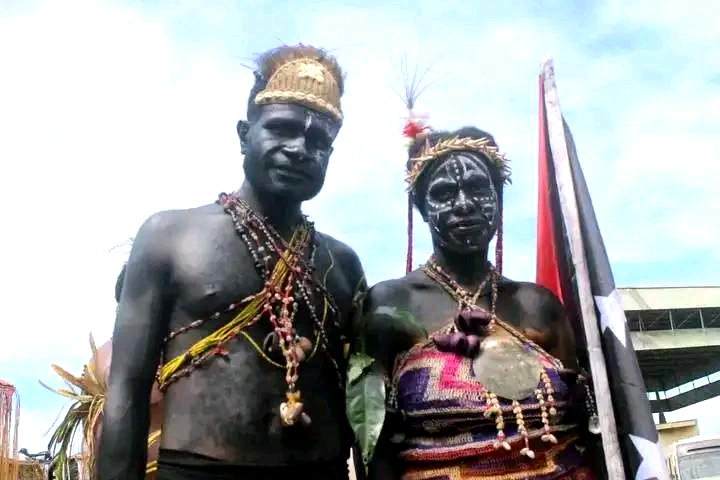
New Guinea is the world’s second-largest island, and though its landmass nearly equals that of California, it remains one of the least urbanized nations globally, with only 18% of its roughly 6 million inhabitants residing in cities. Remarkably, Papua New Guinea boasts an astonishing linguistic diversity, home to over 800 indigenous languages—about five percent of the world’s total.
This diversity is matched by its ecological and geographical wonders. From snow-capped mountains soaring to 13,000 feet, across misty rainforests, active volcanic islands, and vibrant coral reefs teeming with life, Papua presents a dazzling natural treasure trove to the adventurous traveler.
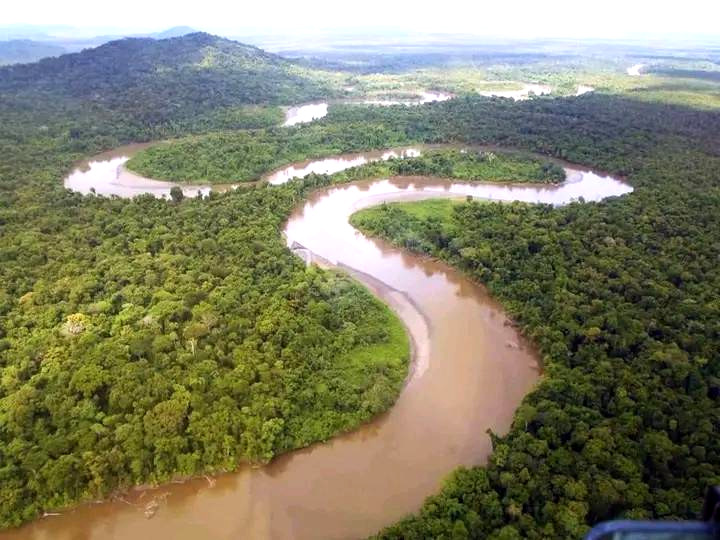
To truly experience this life, one must journey into the island’s interior, navigating the Sepik River in a dug-out canoe. The Sepik, winding for over 700 miles, is more than just a waterway; it is a living museum. It is home to people who create some of the world’s most spiritually charged artifacts and practice one of the most intense and permanent forms of ritual body modification known today.
Kaningara and the Black Water
At the heart of the Sepik region, economic and cultural groupings account for thousands of people speaking over 250 languages. Among these groups are the Kaningara, who occupy a single village on the banks of the Black Water, a significant tributary of the Sepik. The river gets its name from its dark, eddying waters, stained by decomposing vegetation. The surrounding rivers and lakes are home to crocodiles, and the jungles harbor venomous snakes like the Southern Death Adder. Compounding the harsh environment, the entire population suffers from malaria, enduring debilitating episodes of fever and joint pain at least twice a year.
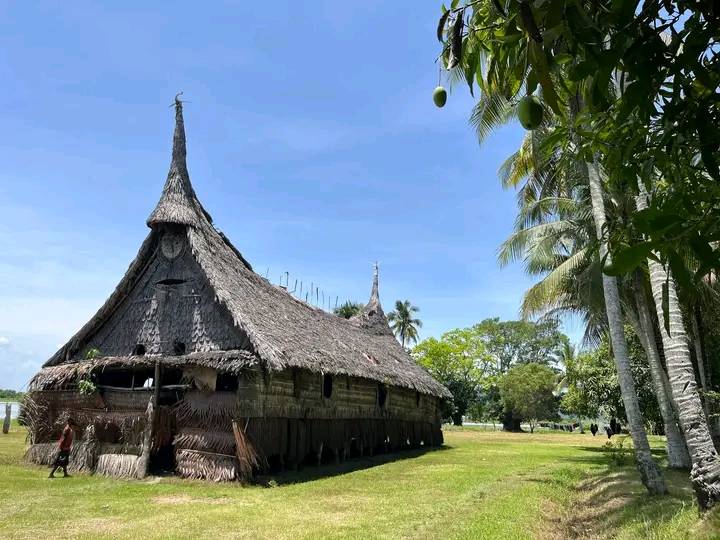
Against the backdrop of the Black Water and the central highlands, the spiritual and human life is celebrated with power and passion. Music, dance, masks, architecture, and the scarification rituals are all artistic expressions used by the inhabitants to communicate with the ancestral world, mark the path to the afterlife, and reinforce the bond between humanity and nature. Virtually every act, from the ordinary—like building a canoe—to the extraordinary—such as former headhunting raids—is an occasion for ceremony. But the most captivating of all is the initiation of young men, which takes place in the $haus$ $tambaran$, or Spirit House, a structure strictly forbidden to women.
The Sacred Space: Haus Tambaran
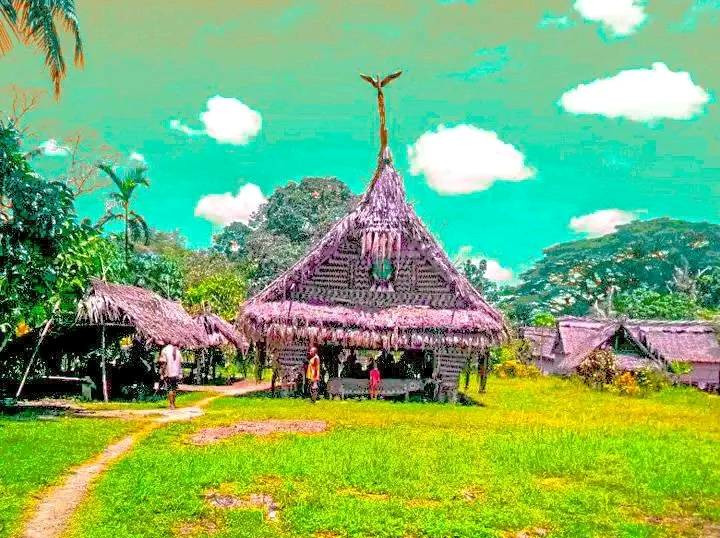
The $haus$ $tambaran$ serves as the physical and spiritual center of the Kaningara village, positioned on its highest ground. Here, men spend a large part of their lives: resting after a hard day, sharing conversation, discussing crucial village problems, preparing for battle, and conducting the ceremonies and rituals vital for their economic and political well-being.
Along the Sepik, an ideal man is one who participates in every ceremony, moving through stratified and affiliated groups. The skin-cutting ritual is no exception; ideologically, it facilitates the rebirth of the Sepik man. Known as the $tambaran$ rites, these are rituals for boys and young men who have transcended parental influence. It is more than just a puberty rite; traditionally, it encompasses a series of ceremonies beginning in childhood, extending through adolescence, and culminating in old age.
Today, these male bonds are lifelong. The scarification ceremony is a testament to this: no initiate could endure the bloody and painful process without the encouragement of his elders. Those marked in the Spirit House work as a team; if one goes without food, another shares. If one gives up, the others use humor and kindness to help him bear the impending pain. No man forgets the experience, having symbolically and literally died and risen again.
The Scars that Save Lives
The scars are also believed to offer protection. One tale recounts a Black Water guide, who was working with a research team when their truck was blocked by a felled tree. They were ambushed by local youths armed with knives and spades, stripped, and had their belongings confiscated. When the marked guide removed his shirt, one of the attackers recognized the initiation cuts shared by both the attacker and the victim from the Sepik tribe. This spiritual connection spared the guide humiliation and abuse, while the others were bound and dragged naked over rocks. The guide subsequently urged his tribe to ensure all young men were initiated, crediting the scars with saving his life.
Kaningara followers believe that Nashut, the crocodile spirit, swallows the initiates whole, just as their canoes devoured their enemies. Some Sepik novices see the war canoes as aggressive symbols of the spirits. In Kaningara, a huge canoe, decorated with crocodile teeth, is suspended above the entrance of the Spirit House—one of many art forms expressing the presence of Nashut.
The Exclusion of Women and the Creation Myth
One distinguishing feature of Kaningara and Sepik culture is the fusion of the father and men with the spiritual idea of male creators. Local legend holds that men were the original creators, but women possessed the Spirit House and the sacred flutes used for spiritual communication with the men. However, one evening, the women were so tired after a long ceremony that they went home to sleep. The men snuck into the Spirit House, stole the sacred flutes, and declared themselves the creators.
Today, women are strictly forbidden from hearing the sacred flute or entering buildings, like the Spirit House, where the flutes and other sacred objects are kept. It is said that if a woman enters the haus tambaran, she will be killed. This is rooted in the deep-seated fear among Kaningara men that women might regain dominance.
The core belief stems from a legend where a Kaningara man, Marsivo, lost his paddle and dove into the water to retrieve it. He swam to the bottom where he found the Spirit House and Nashut, the crocodile spirit, who would only let him return after spending a month there. During his stay, Marsivo learned everything about Kaningara—warfare, headhunting, agriculture, and how to build the Spirit House. Nashut also told him that if the Kaningara men scarred their skin, it would please him, giving them his strength and making them the most powerful tribe on the Black Water.
The $haus$ $tambaran$ and its associated art forms often blend male and female symbolism, to remind the Kaningara that only men can create men.
The Making of a Kaningara Man
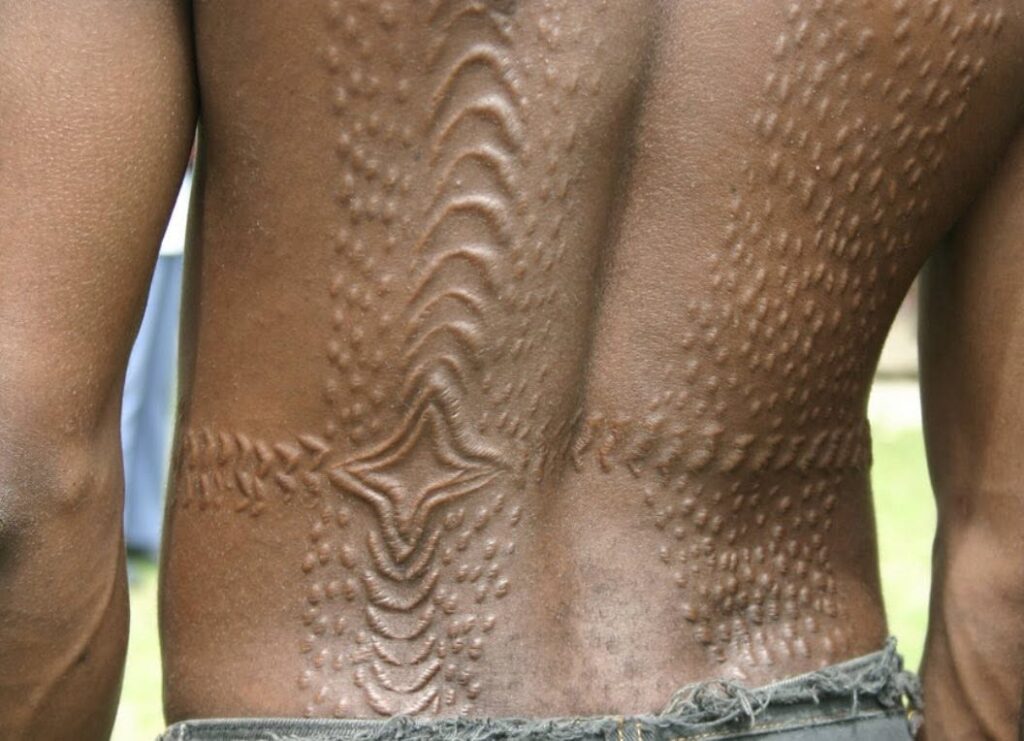
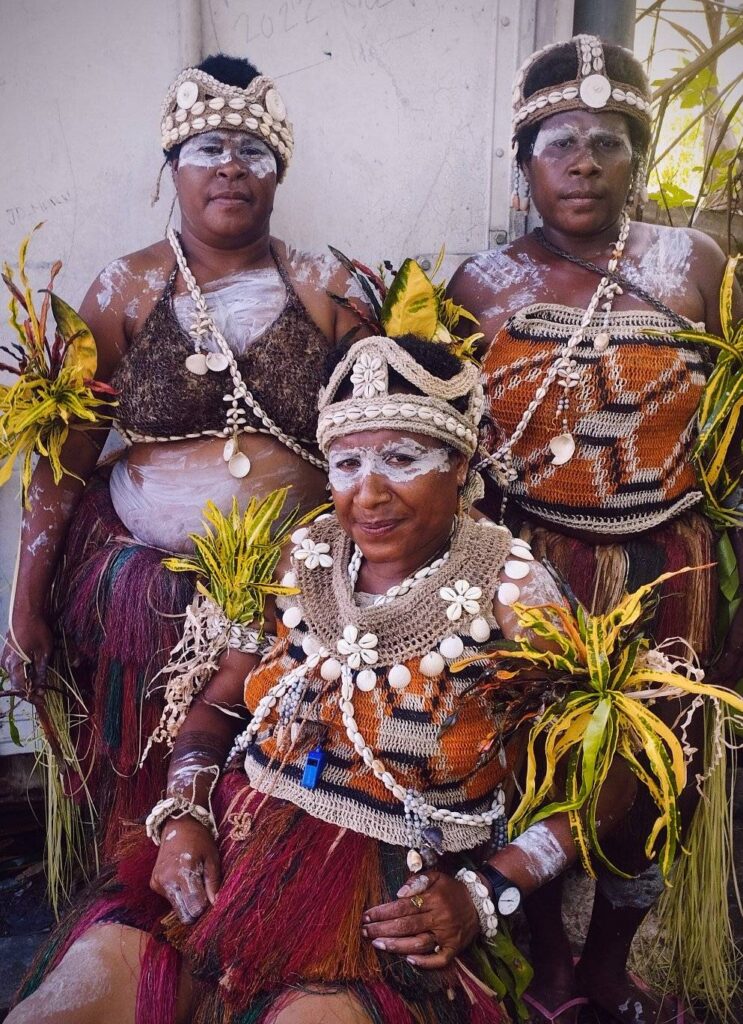
The scarification ritual occurs every four to five years and is a costly affair, involving participants from age 12 to 35. The procedure requires the symbolic removal of the mother’s blood by cutting the skin. Ideologically, this ritual separates the young men from the female world and transfers the spirit of the crocodile to them. The incisions are typically made by the maternal uncle. This returns the mother’s blood to her family while the uncle creates a man for his kin—a process known as parthenogenesis.
During the ceremony, the youths are taught Kaningara lore, the meaning of the rituals, and the significance of every image and object in the Spirit House. This knowledge grants them power, as a man’s strength and greatness are measured by his mastery of secret words and mythological names. Numerous taboos must be observed: sitting facing the wall while eating, avoiding eye contact or conversation with women, and wrapping themselves in a sheet when relieving themselves so that women and children cannot see their bodies. They must eat only fish, herbs, and occasionally bananas, strictly forbidding fruit, meat, and vegetables. Breaking these taboos is believed to cause death during the rebirth period.
The Scarring Process
Claitus, an 81-year-old Kaningara elder and skilled artist, is today’s instructor for young apprentices. He completed his initiation during World War II. He recounts that “we used a knife made from bamboo instead of razor blades. You can make a very sharp knife from bamboo, which you sharpen with incisions. But today we only use blades so as not to spread diseases.”
With their chests slit open, the initiates are led out of the house one by one and laid on beds of banana leaves. Before the cutting begins, the crocodile spirit is said to consume their bodies—and the cuts are what is left over.
The initiates are washed with a sponge and water. Some celebrate their passage to manhood, while others are too exhausted to show emotion. The night before the ceremony is exhausting, spent singing and dancing. Each initiate must hold a piece of ginger root in his mouth without dropping it, or he will be whipped. At sunrise, the youths are taken to the river and left to soak their skin in the cold Black Water for over an hour. This is a severe test against hypothermia, but the tribe believes it softens the skin for the scarring.
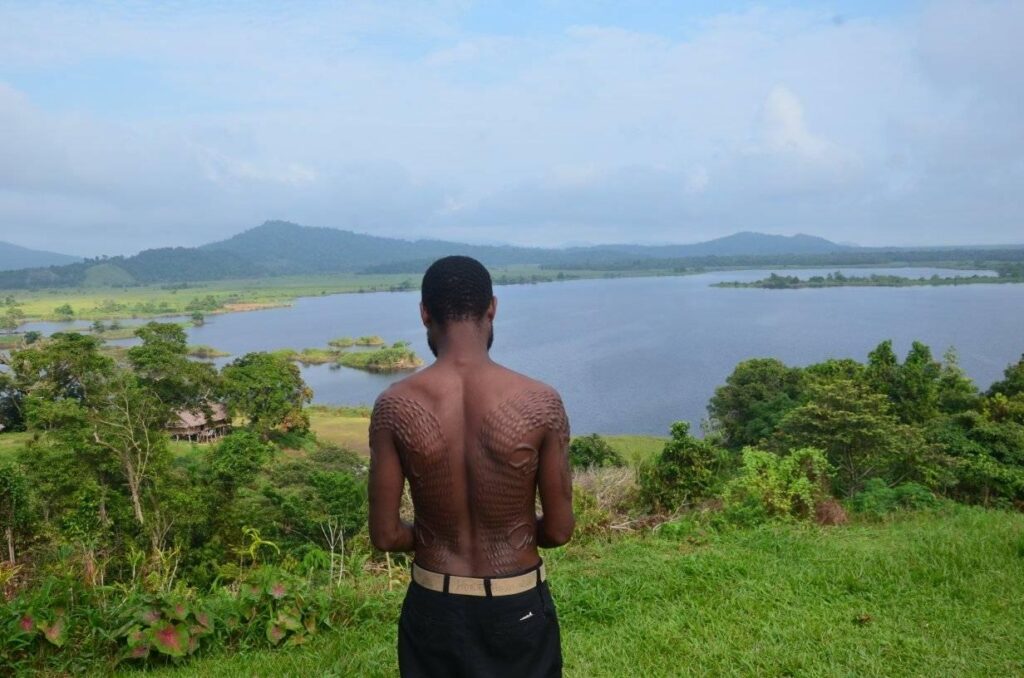
After the chest is cut, the initiates are led out for the back to be done, greeted by applause and encouraging words. This is a moving moment, as their mothers and female relatives have not seen them for months. Once the cutting is finished, they are taken back to the Spirit House to treat their wounds. River mud is rubbed into the cuts, and the young men are left to rest as the fire dries their wounds. The mud stops the bleeding but may cause infections; ultimately, the scars will resemble crocodile skin.
As the elders say: “We are Sepiks, and without this ritual, who would we be? Our village and our people live only because of this ritual. By cutting our skin, we honor our ancestors, and we will never stop… because this is what defines us.”