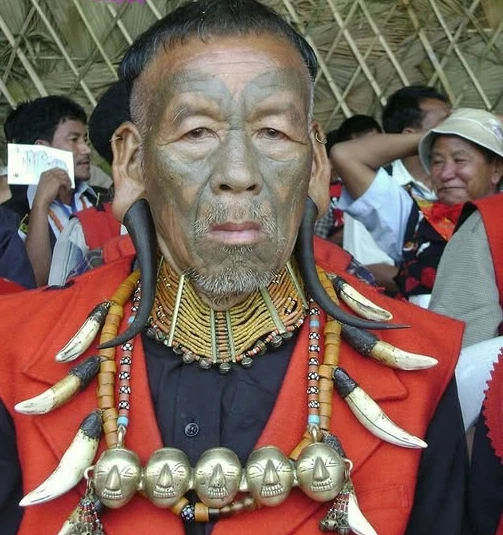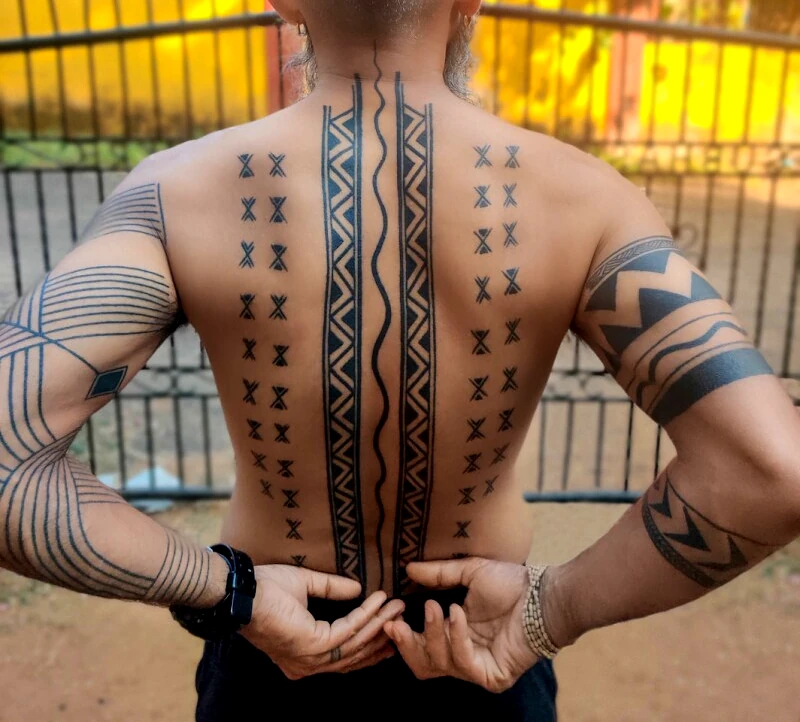
The tradition of tattooing across India is rich and ancient, spanning thousands of years and deeply integrated into the spiritual and social lives of numerous tribes and communities, often serving purposes beyond mere bodily decoration. Tattooing is viewed not as a transient adornment, but as a permanent mark crucial for the afterlife, the only possession guaranteed to accompany the soul beyond death. The absence of a tattoo was, in some cultures, believed to invite divine punishment or scorn in the next world, necessitating the practice.
Purpose and Beliefs
Tattoos, known as gudna in Hindi, are tied to several core beliefs:
- Passage to the Afterlife: A primary function is to serve as an identification mark or even a “map” or “passport” for the soul to reach the afterlife and reunite with deceased relatives, protecting the wearer from demons and the God of Death, Yama. The belief is that tattoos are the only things that endure beyond mortality.
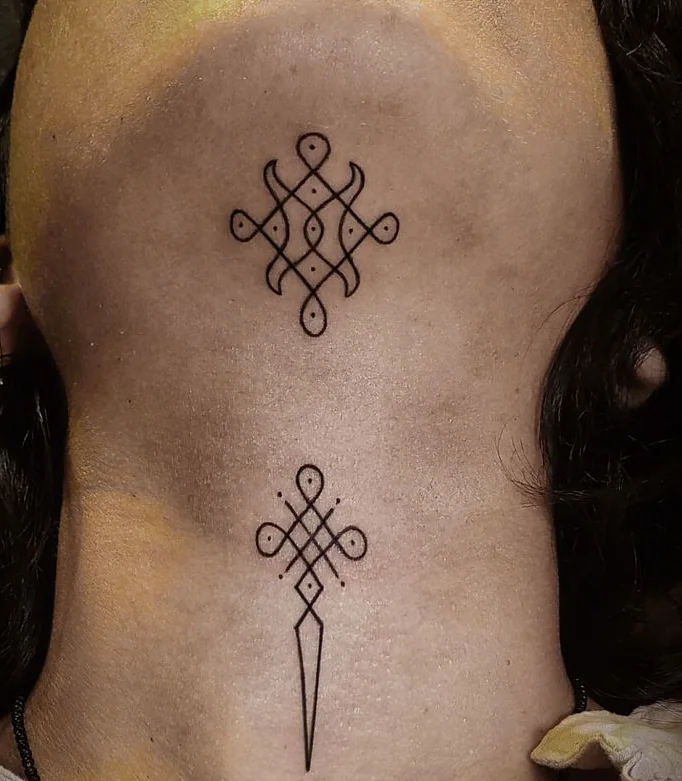
- Protection and Magic: They function as powerful talismans (yantra), providing magical protection against evil spirits, curses, bullets, and the evil eye. Certain patterns, like the kolam or the cobra, were specifically used for this purpose. The intricate, labyrinthine patterns were thought to confuse and trap demons.
- Healing and Wellness: Tattoos were believed to have therapeutic properties, helping to heal various ailments, such as rheumatism, and ensuring the health of internal organs. Specific marks on the face were also believed to aid in easy childbirth.
- Social and Spiritual Identity: Tattoos were integral to identity, marking belonging to a specific tribe or caste, indicating occupation (e.g., milkmaids, traders), marital status, or the completion of rites of passage. They expressed cultural pride and spiritual devotion.
- Fertility and Prosperity: Symbols like the fish, lotus, and certain animal motifs were associated with fertility, luck, wealth, and the attraction of a good spouse.
- Sexual Expression: Among some tribes, particularly the Baiga, tattoos were seen as a form of sexual stimulant and enduring beauty, often compared to a “coat that can never be removed.”
Motifs and Symbolism
A vast array of motifs is used, drawn from religion, nature, and daily life:
- Religious and Mythological: Depictions of deities like Rama, Krishna, Hanuman, Lakshmi, and their divine implements (sankh, chakra, gada, padma), along with symbols like the Swastika and sacred footprints, are common, demonstrating strong ties to the Hindu faith. The yoni (female power), often symbolized by a triangle, was also a significant mark.
- Nature and Totems: Animal motifs are highly prevalent, including the majestic tiger, lion, horse, camel, elephant, peacock, scorpion, snake (cobra), and bee. Plant life such as the lotus flower, mango, palm, and acacia are also frequently used. These often represent the spirit of the animal or the tribe’s totem.
- Geometric and Abstract: Complex patterns like the kolam labyrinths, dot-and-line puzzles (dhandha), chains (sankal), steps (ghat), and the V-shaped mark of the Baiga are used for their magical, protective, or social significance.
- Everyday Objects: Designs representing items like the butter churn cover (der), water pitchers, altars, and saddles tie the marks to the wearer’s daily life and caste.
Tattooing Practices and Rituals
The process of tattooing was often ceremonial, reflecting its deeply spiritual significance:
- The Practitioners: Tattooists were traditionally women, such as the Korathi (Roma), Mer women, or the Godnaharin (Baiga and Khond), who often traveled between villages during winter months (December/January) when wounds healed faster. In Naga tribes, older women or the chief’s wife performed the ritual. The shift to professional male tattoo artists using machines for cash payment is a noted effect of modernization.
- Tools and Ink: Traditional tools were simple: a stick with two or more sharp needles (or cactus thorns) tied to the end, often resembling a small adze or axe. The dye was made from natural materials, typically soot (charcoal) mixed with various substances like pine resin sap, mother’s milk, cow urine, turmeric, or water mixed with the bark/leaves of specific plants. The ink was usually black/bluish-black, though sometimes greenish or even red (mercury oxide) was used.
- The Ceremony: The procedure was often accompanied by blessings, prayers, or songs (Gopika Gita), intended to distract the tattooed person from the pain, imbue the tattoo with spiritual power, or appease deities. The selection of the day often involved divine consultation, followed by a feast. In some tribes, like the Wancho, rituals included sacrificing animals (pigs/chickens) to ward off evil spirits during the painful process.
- Pain and Endurance: The process was extremely painful, often involving multiple, quick punctures. Enduring the pain was a test of strength and character. It was believed that those who screamed would be laughed at, and endurance was a prerequisite for marriage or battlefield glory.

Regional Variations (Gujarat, Naga Land, and Arunachal Pradesh)
- Gujarat (Mer and Rabari): Tattoos were considered a permanent form of wealth. Popular designs included religious symbols, animals (camel, lion), and linear/geometric patterns like the hansali (a necklace design) on the chest. The Rabari, a nomadic tribe, also used tattoos extensively for caste identity and magical protection.
- Naga Tribes (Ao, Konyak, Wancho): Tattooing was historically tied to headhunting and warfare, symbolizing male bravery and the taking of trophies. Warriors who acquired an enemy’s head were rewarded with tattoos on the face, chest, or other parts of the body. For women, tattoos marked transitions, social rank, and protection against dangers like tigers, although this tradition is now fading due to Christianity and modernization.
The rich and varied tattooing culture of India, while facing erosion due to modern influence, remains a fascinating record of indigenous tribal beliefs, social structures, and artistic expression.