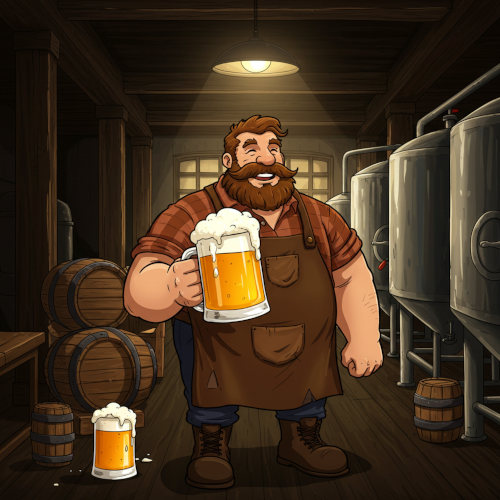
Hi there!
I’ve always been drawn to things that involve a touch of creativity, tangible craftsmanship, and a personal story. Perhaps that’s why the world of handcrafts has fascinated me so deeply—whether it’s tattooing, cooking, or brewing beer.
For me, craft beer is not just a drink, but an experience: unique flavors, aromas, and characters that you can shape according to your own taste.
I absolutely love craft beers—not only tasting them, but making them as well. The first time I saw how a beer is born from malt, hops, and yeast, I was completely captivated by the process. The idea that a handful of simple ingredients, with attention and patience, can become something truly special instantly enchanted me. Brewing quickly turned into a passionate hobby for me—like a little bit of magic that I can control with my own two hands.
I thought that if I was going to take this seriously, I wanted a name that would reflect my love for creation. Since I work as a tattoo artist, The Tattooist Craft Beer was born. For me, it’s not just a brand, but a symbol—representing the hand, the care, the soul, and the individual style behind every beer.
I’m interested in many things that require creativity, and that’s how brewing became one of my favorite pastimes. I also love cooking; at home, I’m known as the “kitchen fairy uncle,” the one who happily spends time by the stove, experimenting with new flavors and recipes.
Cooking and brewing, to me, are about the same thing: the joy of creation, the harmony of flavors, and that sense of peace you feel when you lose yourself in something you truly love doing.
I don’t like to rush things. Brewing teaches you patience—every single step has its own time. Water, malt, hops, and yeast each shape the outcome in their own way, and with every batch I brew, I learn something new.
As the years went by, I experimented with different styles, tried new recipes, and gradually developed my own distinctive taste.
So The Tattooist Craft Beer is not just a name, but a story—a story of curiosity, learning, experimentation, and joy.
How did I become a fan of craft beer?
I first tasted real craft beer at a local fair—an American Pale Ale. Its flavor was completely unlike anything I’d ever tried before. I sensed such an intense hop aroma and grainy character that it completely changed the way I looked at beer.
Although I don’t drink every day, sometimes a good beer can be truly satisfying. Yet I could never quite find the taste I was looking for on store shelves. I tried many kinds—some were good—but somehow none felt quite right. I often noticed strange aftertastes, and at times it felt as if there was a medicinal note at the end of a sip. That unpleasant aftertaste often took away my desire to drink more.
That’s why I started visiting fairs regularly, where several brewers showcased their beers—including the one from whom I first tasted that memorable APA. Unfortunately, such events only take place a few times a year. I considered ordering online, but the minimum order quantities were often too large, and the honest truth is that I couldn’t afford to spend that much money on beer every couple of weeks or months. Not because I was struggling—simply because I try to manage my finances wisely.
How Did Brewing Become My Hobby?
My brother-in-law and sister-in-law came to visit from England and brought me a complete “all-grain” homebrewing kit. The package contained everything I could possibly need: malt, hops, yeast, a glass fermenter—basically all the essentials for brewing beer.
At first, I put it aside, as I didn’t feel any urge to start brewing at home. To be honest, I didn’t really see much point in it. But about three or four months later, I came across it again and decided to read the instructions: what was in the kit, and which YouTube videos were recommended to learn the steps of brewing and fermentation.
For a few days I just watched those videos, but I found myself becoming more and more fascinated by the process. Then one day, when I was home alone and a bit bored, I thought—why not? I took everything out and decided to give it a try.
The biggest surprise was that the result turned out to be a dark, black beer—even though the kit only included pale malt, nothing roasted or dark. I don’t remember exactly what the recipe was called, but I think it might have been an English-style porter.
At first, I was a little disappointed, because I had never liked dark beers. I always found them too sweet, sugary, or caramel-like.
The beer slowly matured, I bottled it, and put it away to rest. About a month later, when I happened to be out of other beer, I thought I’d give it a taste. And to my surprise—it was delicious! Especially for a first attempt, I hadn’t expected much success.
From that moment on, I grew fond of dark beers as well. This one wasn’t sweet or overly caramelized; rather, it was pleasantly full-bodied, foamy, with a gently roasted, grainy flavor, and a special character I hadn’t experienced before. The four liters of beer disappeared gradually, and as time passed, it became even tastier.
Since my first brew turned out surprisingly well, I began reading more and more about brewing, watching videos, studying recipes, and experimenting with different beer styles. Dark beers have remained a constant favorite ever since I still brew a good Stout from time to time.
In the beginning, I also tried brewing Pilsners and Lagers, but back then I didn’t have the right equipment or experience, so those batches weren’t perfect. Still, even those tasted better to me than store-bought beers. Over time, I completely stopped buying beer I’ve been brewing my own ever since.
The Pale Ales and IPAs, however, turned out great from the very start: they never oxidized, always had a full, fresh flavor. My Stouts also came out delicious every time. Occasionally I fine-tune these recipes a small adjustment here or there to the aroma or mouthfeel—but overall, I can say I brew flavorful, characterful beers.
There were times when I tasted an IPA from a well-known craft brewery and felt that mine tasted better—perhaps simply because I had tailored the recipe to my own taste. Of course, I always feel there’s room for improvement, but I believe that’s true for every brewer: there’s always something new to learn.
In 2024, I bought an electric brewing system and a fermentation tank. Later, I added a freezer with a temperature controller, kegs, and a CO₂ tank—now I feel like a fairly well-equipped homebrewer. My beers are getting better and better, and my friends often compliment them. I like to bring some as gifts, and when guests come over, I always treat them to a freshly tapped homebrew. Sometimes I give bottled ones as presents, too.
On weekends, when friends call me, the invitations sound very different from how they used to. It’s no longer, “Let’s go out for a pizza and a beer,” but rather:
“Let’s go to your place—we’ll bring the pizza, and you’ll bring the beer, right?”
That always makes me smile, because it says a lot about how much they’ve come to love my homemade beer.
Slowly, the whole group of friends stopped drinking industrial beers. It’s no longer about how much we drink, but what we drink. Even acquaintances often ask me,
“Can I have a little sample?”
And when they taste it, the next question is almost always,
“Seriously? You don’t sell this?”
Unfortunately, I often can’t even give some away, because even though I don’t drink very often, a large batch can disappear in no time when we gather with friends or family for a weekend. Even those who never used to like beer end up drinking it!
That always makes me smile quietly to myself—maybe that’s the best proof that I’m doing something right.
I brew my beer in a small home fermenter, and I can make about twenty-five liters at a time, roughly every two weeks. When I think about it, that’s not really a lot: I give some as gifts, I’m the “beer guy” at weekend gatherings, and whenever we go camping or have a barbecue, everyone naturally expects my beer.
The truth is, I’ve always been generous—I’ve never been stingy with my beer. For me, the greatest reward is seeing the satisfaction on people’s faces when they take a sip and smile.
Nothing more is needed: a group of friends, a good mood, a plate of pizza, and a few glasses of homemade beer.
That’s when I truly feel why I fell in love with this hobby.
I’ve always loved cooking and baking. It often happens that friends or family ask, “Attila, could you bake something, like you usually do?”—and I happily say yes. That’s probably where my love for brewing also comes from. It’s the same process, the same kind of magic: when you create something with your own hands, and it turns into joy, aroma, and flavor.
To be honest, I adore cooking. When I’m standing by the stove or the brewing kettle, it’s as if all worries leave my mind. The quiet bubbling of the wort drowns out the noise of the world, and only the moment remains. That’s when I feel my soul relax—when I’m immersed in the process and nothing else matters.
In cooking, just like in brewing, the secret always lies in the proportions: the right amount of spice, the perfect balance of ingredients, the harmony that makes every flavor fall into place. The same applies to beer: the balance of hops, malt, and yeast gives it its true character.
I feel that I have a natural instinct for this—somehow, I just know when the flavor feels complete, when all the elements come together.
I have no ambition to compete with big breweries. I couldn’t, even if I wanted to—after all, I work with a 35-liter kettle and a 30-liter fermenter, brewing about 25 liters at a time. But that’s more than enough for me. I know my beer is made from natural ingredients, and every batch is crafted to my own taste—exactly how I envisioned it.
Of course, not everyone likes the same things. Just like with food, everyone has their own preferences when it comes to beer. We’re all different—and that’s perfectly fine.
It’s always been that way: one friend preferred one brand, another liked a different one, and back in the days when there was only one kind available, even those who didn’t like it still drank it—though they’d complain about it for hours afterward.
Beer is like candy: some people love fruity or raspberry flavors, others prefer minty, spicy, or even hot, chili versions. Everyone has their own taste, their own world—and that’s what makes it beautiful.
Over the years, I’ve experimented with countless beer styles. Some didn’t turn out as I had hoped, and some were surprisingly successful. I learned something new from every single batch. Gradually, I filtered out the hop varieties that didn’t suit my taste, and discovered those that I truly loved. The same goes for malts. I’ve learned how each one shapes the beer’s character and how to bring them into harmony with one another.
What I share with you in is the result of years of experimentation, learning, and experience. All you need to do is read, follow the recipes, and I guarantee you’ll brew delicious beer—beer you’ll be proud to share with your friends.