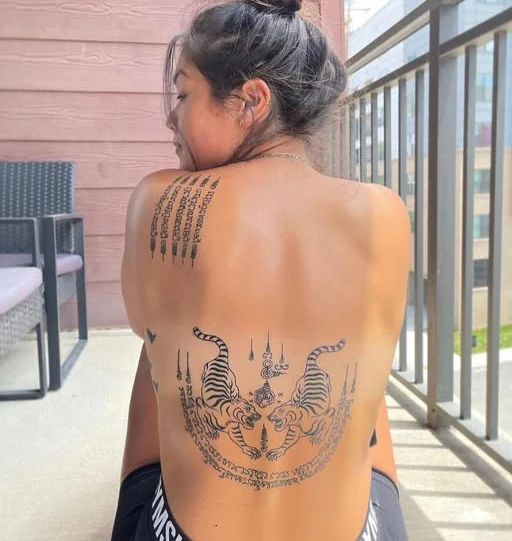
THE MAGICAL TATTOOS IN THAILAND
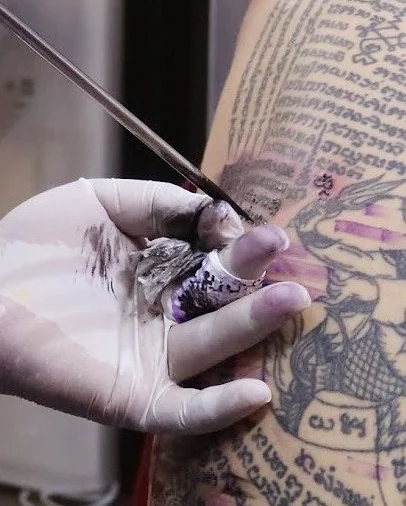
The magical tattoos, called “Sak Yan” in Thailand, are based on ancient texts of the Khmers, a combination of magical numbers and mythological characters created by the Hindus, which are believed to imbue special powers. They were originally used only by monks, but they gradually captured the attention of the Thai people. It is believed that the magical drawings protect their owners from bullets and knives, bring good fortune, and ward off danger, while others give strength and attract destiny.
AYUTTHAYA ELEPHANT TRAINERS
Elephants have played an important role in the historical culture of Southeast Asia for thousands of years. Used for warfare, transportation, and construction, the elephant was the equivalent of the domesticated horse in the Western world, helping to build countries like Thailand and keeping enemies at bay for centuries.
Today, the Asian elephant is threatened with extinction, and the elephant population in Thailand is estimated at around 5,000, including both domesticated and wild individuals.
Since hunting was officially banned in 1988 (though illegal hunting continues in parts of the country, where elephants are fed large amounts of methamphetamine to work them to the point of exhaustion), many domesticated elephants were released back into the wild because they were no longer employable. The wild elephants face danger as their jungle habitat shrinks.
Another problem people struggle with in Thailand is the rapid aging of “domesticated elephants.” For this reason, these elephants are no longer used for work, but rather the younger ones, on whose backs tourists can take walks and see the sights. Old elephants have generally spent most of their lives working and deserve to spend their remaining years resting in minimal comfort and the dignity they have earned. Regardless of age, old and young elephants are sold across the borders.
Elephants are believed to bring good luck, so their body parts are sold at very high prices. Unfortunately, a dead elephant is worth more than a live one. The value of young elephant calves is increased by using them for entertainment at hotels or keeping them as a specialty for curious tourists. Michelle Reedy, who participated in the “Elefantsay pachyderm” conservation program, told Lars that small elephants are underfed to keep them manageable in smaller groups. The mother is usually killed, and the small elephants are sold at an inappropriate age, separated from their mother. The small elephants are quickly sold or killed because they are in the way. Just like humans, elephants have intelligence, emotions, and memory. The vast majority of Thai elephants have been physically or psychologically abused by their owners, starved, drugged, or worked to exhaustion; a large percentage of surviving elephants are “traumatized.”
Today, elephants sometimes rebel, and researchers estimate that 200 people are killed by elephants annually in Thailand. If there were no elephant trainers, the number of victims would certainly be higher.
The elephant tattoo of the god Ya is a design also called Chang. Buddhists believe that in a previous life, before taking human form, Buddha was an elephant. It is an incredibly magical and strong tattoo.
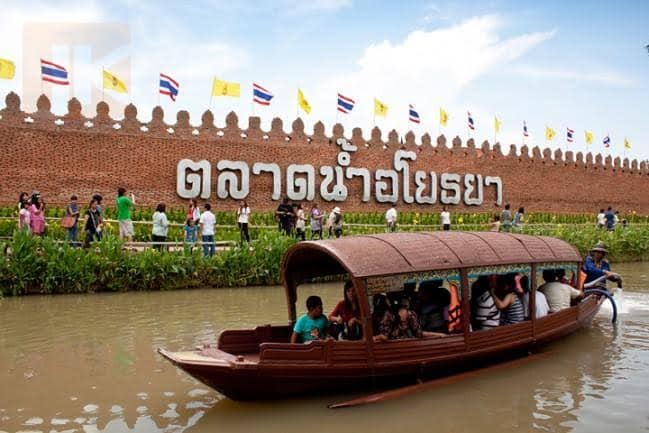
Ayutthaya was the elephant market where Thai kings decided on the selection of wild elephants for official use. The king sat in a real pavilion, a building with a red roof. An altar with a white elephant was located in the middle of an iron gate, and this gate held the small elephants captive.
The Mahout Warriors, the Noble Elephant Leaders:
Natives, also known as Mahouts in Thailand, are people who excelled at capturing and training wild elephants. They are said to originate from Cambodia, so it is not surprising that almost all “leaders” speak an ancient Khmer or Kuay language, or both Cambodian languages.
700 years ago, Mahouts were royal warriors who fought alongside elephants against the kings of the Khmer Empire. They formed the elite ensigns and drove the elephants as if they were modern tanks today.
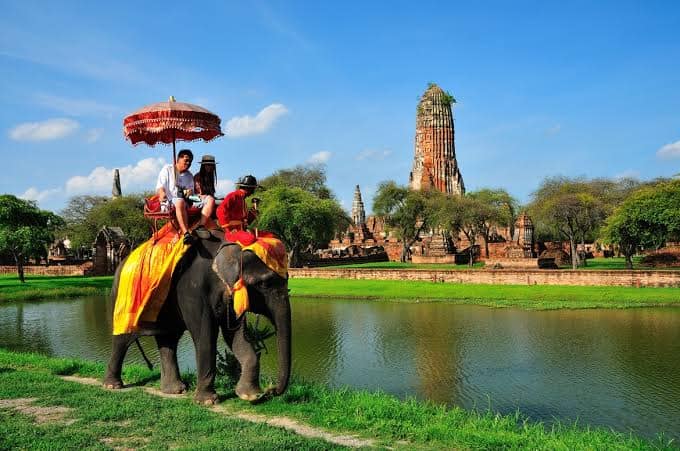
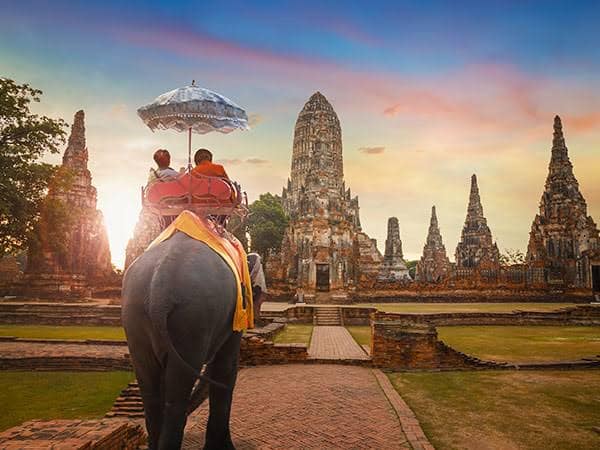
It was important for the Ayutthaya kings to use elephants as actual war machines. Kings or noble warriors sat on the elephant’s neck, playing the role of the leader. Armed soldiers and “ensigns” stood behind them, using the elephant’s legs for protection for the infantry.
Although elephants have not been used in wars since the mid-1800s, the “masters” (Mahout) considered elephants the most important part of the army. In line with Ewa and Michelle, war elephants received different training: “Lor Pan is the special training of the elephant to attack the knighthood, crush enemies, and destroy the cavalry. Tang Hune is the training that kills enemy infantry, and Pan Pad is the method used to take over strongholds. Bamru Nga was the pinnacle of training, where elephants were trained to fight each other while their riders could launch attacks with their swords to kill their opponents.”
An elephant’s body consists of more than 40,000 muscles, while the human body only has 639. The trunk is a combination of the nose and upper lip and can hold more than 270 kilos of fluid. It can draw up between 7.5 and 37 liters of water. Recent studies have shown that elephants can “smell” approaching dangers.
For years, Pan had to work and save about $10,000 to buy an elephant. When he returned to his homeland in Cambodia, the animal was poisoned; he is now working at the Royal Square Elephant to earn enough money to return with another elephant. Interestingly, Pan’s father was an officer in the Khmer Rouge army; the grenade was easy to find, so when he was bored, he walked around the city and liked to blow up knees with a grenade for various purposes. He was imprisoned and tattooed a grenade on his chest as a sign to the authorities. Before he died, he asked his disciples to carry this symbol, which embodies magic forever.
Traditionally, Mahout trainers had to work with their elephants for years to develop their abilities on the battlefield. To gain their trust and respect, Mahouts had to work with the elephants daily to teach them the necessary commands that turned them into real war machines. Naturally, a real bond formed between the elephant and its trainer, as the relationship between a Mahout and his elephant was much deeper than that between a trainer or master. In fact, for a Mahout, the elephant was considered a trustworthy family member and a close friend.
Unfortunately, these emotional and physical bonds that united them for centuries have begun to weaken, especially because the trainers now live in an economy facing a difficult socio-economic situation. You can imagine that it is extremely costly and complicated to own and care for an elephant.
An elephant drinks about 120 liters of water daily and eats about 100 kilos of food. And because elephants overheat from too much sun, they need to bathe in water (rivers, pools, lakes, etc.) several times a day to cool down.
Thus, today, many Mahouts simply cannot afford to keep their own elephant. For example, a regular trainer earns only 120 euros per month, the same as a cashier in a store. And since an adult elephant costs about $10,000, it takes many years of work to replace one if it gets sick, severely injured, or perhaps dies. According to Ewa, domesticated elephants and their trainers generally live poor and toiling lives. After the caging of elephants was banned, many Thai Mahouts left the forest with their elephants, looking for a place where tourists wanted to see sights and take photos on elephants. They were not allowed into most cities, and it was banned in Bangkok. Of course, it was dangerous because some elephants were injured by cars or weaker roads were crushed under the elephants due to their heavy weight.
Some Mahouts, like Sai, not only wear protective tattoos on their bodies but also small armed Buddha amulets. For the talisman to work, a small amount of food must be given to the protective spirit during meals.
There may be loans that support the animal, but the financial burden of such an animal is greater than what a Mahout can ever afford. An elephant can be bought, but its owner can sell it multiple times during its life if they cannot pay off their debts. If there is huge interest on the elephant, or it gets sick and cannot work, the whole family struggles with financial problems. Unfortunately, there is no legal protection or government support in this regard, and they cannot receive the legal protection and support that these trainers would require in Thailand.
Repetition is the main principle of Buddhism. Precisely, Mahouts continued to repeat old instructions to the elephant, trying to train and control its overwhelming power. Tattooed monks read Katha mantras hundreds of times throughout their lives, hoping to cope with the power with which the tattoos are endowed.
Despite the economic difficulties, these Mahouts continue to work with elephants in the usual way, working at the Elephant Market in Ayutthaya, continuing their lifestyle, maintaining the traditions of their ancestors, full of rituals and beliefs, believing that elephants are magical and mystical animals.
For example, every morning before going to work, they stop in front of the local shrine and pray to the ancient spirits of the dead elephants for protection. Many Buddhist monks in Mahout wear magical tattoos and make amulets, which not only protect them from danger when working with elephants but also help in individuality and spirituality. The tattoos are recognizable even by their own elephants, despite their poor eyesight, being able to distinguish between a “friend tattoo” or “enemy tattoo.”
Here at the local elephant market, any small protection is a big help, as an elephant can strike with its trunk, and it can be a small blow, or you can end up under 1,800 kilograms if you are not “lucky,” as the Mahouts say.
The Ayutthaya Elephant Institution:
Mahout Toi’s story about his first tattoo: “I felt a huge magical power flooding my body.” This tattoo gives faith, confidence, protection, and will help me concentrate when working with the elephants.
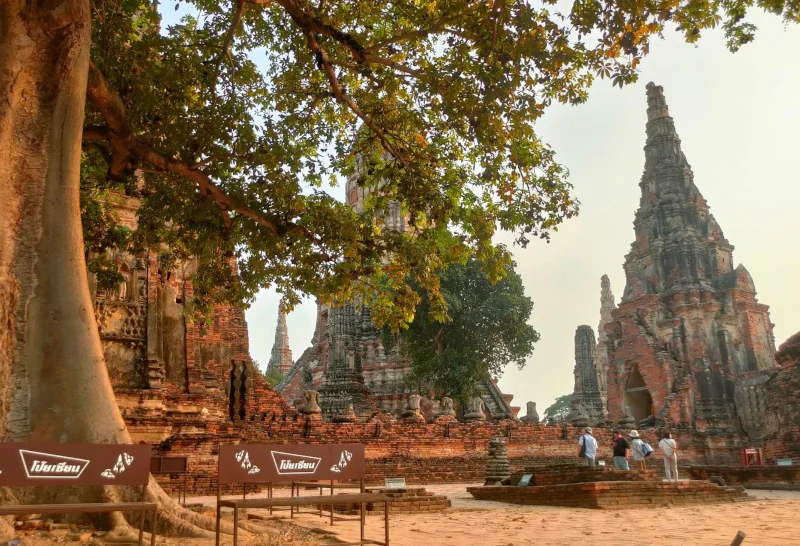
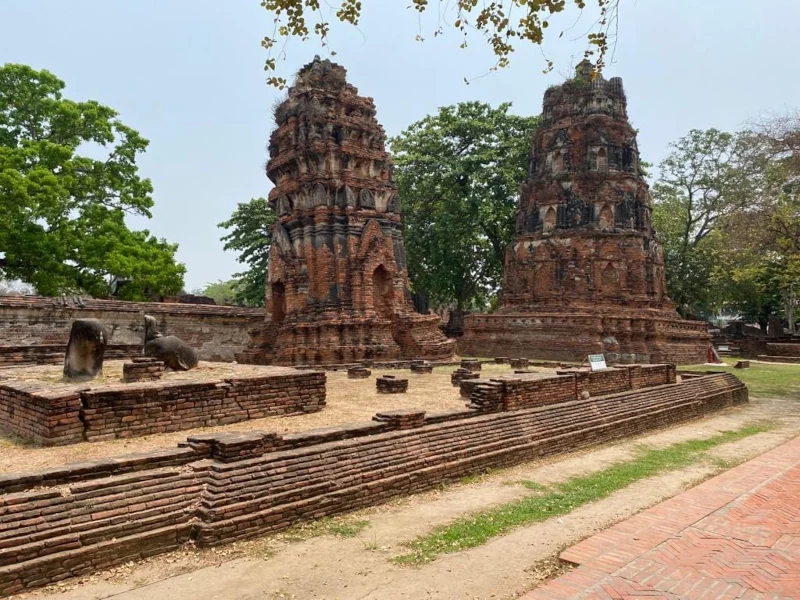
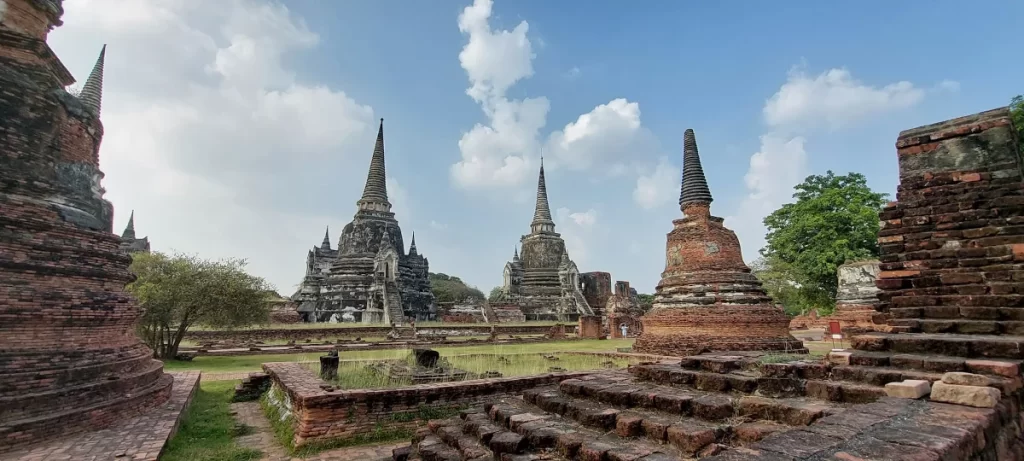
Ayutthaya city lies 53 miles (about 85 km) north of Bangkok. Between 1350 and 1767 AD, it was the capital of Siam until it was burned and looted by the Burmese. Subsequently, the capital moved to Bangkok. By the end of the 17th century, the city already had 1,000,000 inhabitants and was visited by European and other foreign ambassadors, who claimed it was the most modern and beautiful city in the world at that time.
Over 500 temples still stand here, many of which were built by Thai kings in memory of their wartime victories, or in the name of their families, due to the required Buddhist tradition. Today, most people living in Thailand practice Buddhism.
“Praise of Ascension” (Tham Boon) is a Buddhist concept related to positive karma. “Merits” grow over time and can be increased by positive karmic actions (blessing), but at the same time, one can fall through “sinful” (baap) actions. “Gratitude” or “merits” often accompany the luck of religious practice but have a “moral currency” value.
Every action that comes with compassion and wisdom is “meritorious,” but one of the strongest positive actions was the donation of food, money, and clothing to the monks.
Another way to increase positive karma, besides pilgrimage, was the rebuilding, renovation, and restoration of the temple. Throughout history, elephants were generally used by the kings of Ayutthaya to broaden religious beliefs and positive karmic actions and rebuild Buddhist temples and monasteries and erect certain sacred temples to Buddha.
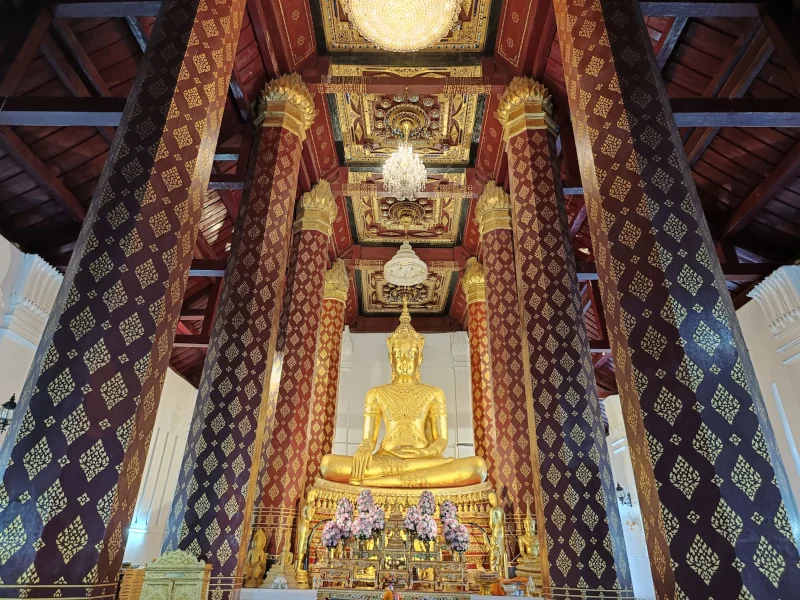
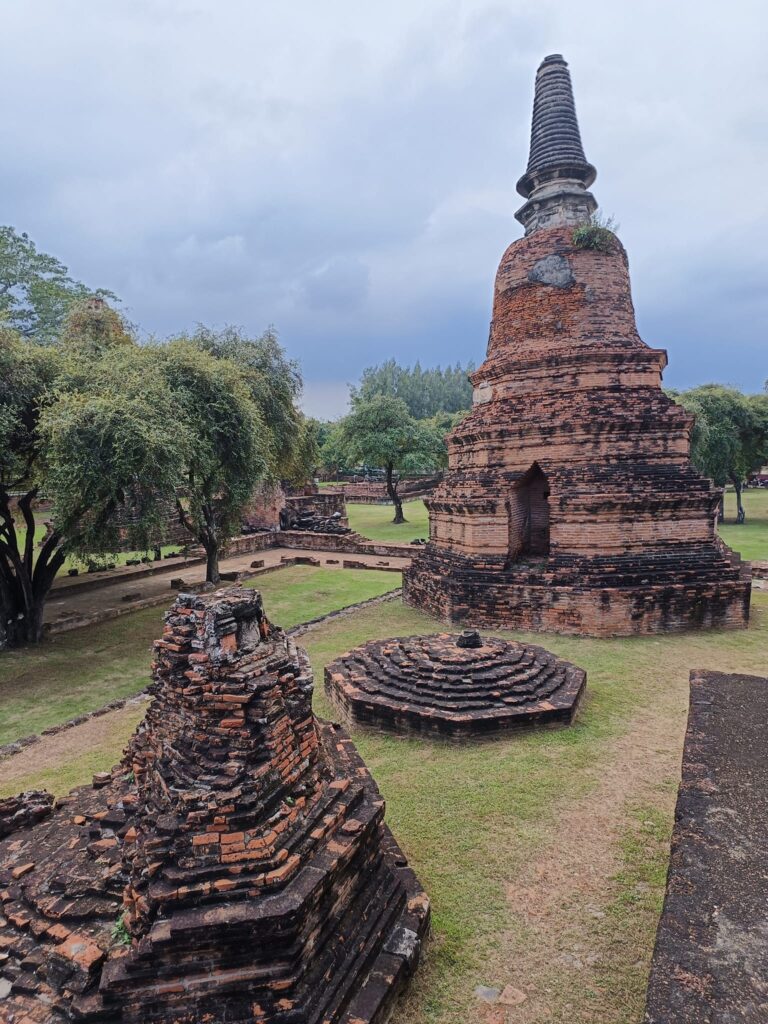
The temples of Ayutthaya were designed to symbolize Buddhist cosmology, standing on the highest mountain called Meru, the center of the universe, where the god Indra, the leader of the universe, resides. This temple is local, where Buddha relics are kept.
Kao-Yot or the “9 Peaks Tattooed Temple” is a goal for many Mahouts. It is said to banish evil from the eight cardinal directions, as in ancient times.
But elephants were also used by the kings of Ayutthaya to enhance their own glory, winning many battles with them, and because these wonderful creatures were, they clearly increased the glory of the king; when choosing a residence, he always sat in a pavilion safe from the place where the elephants were locked up.
Before the tattoo teacher or “Arjan” began the tattooing, he first had to read the auras to know which model was needed. It is understandable that everyone who reached the Wat Bang Phra temple wanted an ancient tattoo, which represented the “8 compass points,” and it was the only temple in Thailand where they tattooed.
Although the royal residence has not hosted any ceremony for more than 100 years, the lands next to the market are currently the places where the Elephantsay programs take place, helping “retired” elephants and about 50 Mahouts and their families who are dedicated to the care of more than 150 individuals under their care.
The elephant camp was established 11 years ago by an African resident. He had financial and personal connections with the Thai royal family, which included the area that was the old elephant accommodation; he and his wife decided to live modestly among these animals, providing personal supervision in the beloved and breeding program, which is the most successful project in the country. Recognizing the situation with the decreasing elephant population in Thailand, he is committed to developing new and unique projects to promote the cultural heritage of elephants.
Although many elephants seem extremely friendly, they can also be very unpredictable, especially if they are not treated the way they want. For this reason, Mahouts have the most dangerous job in all of Thailand. Just like other people with dangerous jobs in Thailand, many believe that the power of magical tattoos not only protects but also helps them concentrate when working with the camp’s most dangerous elephants.
Pan arrived from a Cambodian village a few years ago. Raised in a famous Mahout family, he recounted that the tattoos saved his life several times. Mahouts have a 50/50 chance of dying every day. If the elephant is good, your life is good. But if the elephant is bad, you have a chance of death. When I was a boy, my family and I raised an elephant that went mad. It killed my grandfather and my brother. I think I was the only one who escaped death, thanks to my tattoo, which I received from a Buddhist monk.
Another Mahout resident told us that he has an incredible tattoo on his back, also received from a Buddhist monk from the village. He told Lars that this animal on his skin is strong, and he believes he absorbs a part of its strength, and that he has never been injured so far.
Most will say that the real magic in Thai tattoos comes from Buddhist monks, that these tattoos and even the smallest poor communities in Thailand are held sacred to the strongholds and the priests.
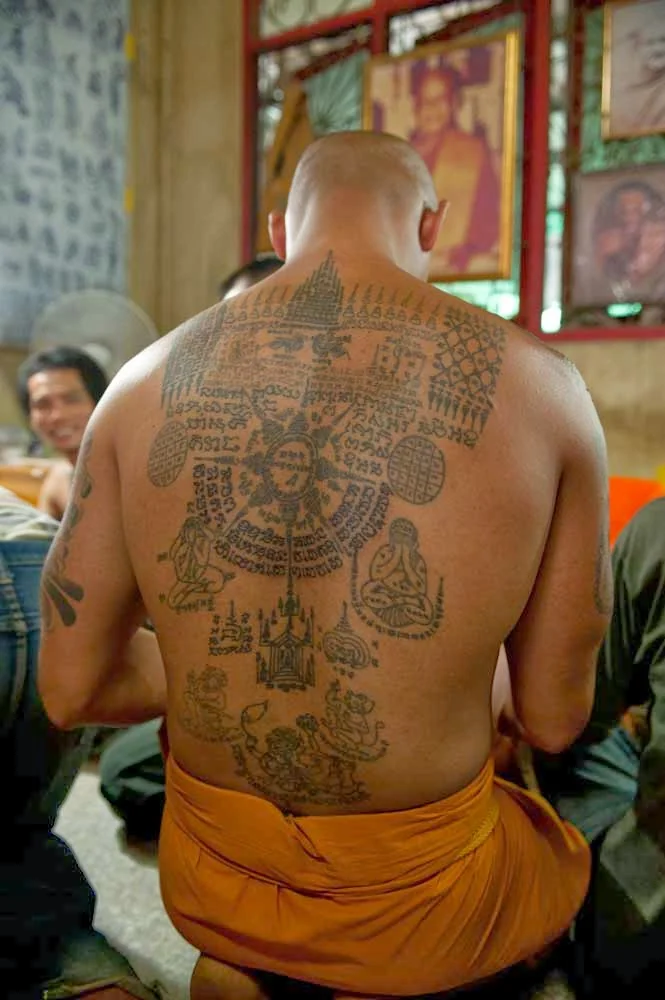
Animals are part of the magical elephant tattoos. Several types of animals are part of the magical elephant tattoos, but the tattoo on the back is a diagram written in Khom, magical phrases, sacred calligraphy in the ancient Khmer language. Katha is a part taken from Buddha’s teachings, written on the skin or coded, written in diagrams that only priests learned to read. Kathas and diagrams are used in every tattoo, and the meaning of each line depends on the role of the tattoo.
For every magical tattoo, the priests read from the Katha before, during, and after. These lines can be heard by the tattooed person, but the language is difficult to understand, and at the same time, the words sound like murmuring; the power of the tattoo will not work if the priest does not repeatedly recite the five Buddhist concepts throughout his life. Only men get these magical colored tattoos; women do not.
Only a few priests tattoo women, but only with clear oils. Their experiment in this direction is to be careful not to kill, steal, use various chemical substances, and not engage in inappropriate sexual life. The oldest and most devoted of them can choose eight vows, including the previous five, which adds refraining from eating after noon, entertainment, and not sleeping on high or large beds. The more rules one can follow, the stronger their tattoo will be. And the Katha will be stronger the holier the priest who makes the tattoo.
Becoming an Arjan:
Many claim that the Katha verses on the tattoos have power because of the sacred words, while others believe they have power in themselves, not just because they are Buddha’s teachings. The source of all powers can be found here. Thai residents follow theories and theories in life, on earth, and these are all connected in a way. This belief is a network of thoughts that accompanies people in their daily lives; the words do not have magical power in themselves, but the circumstances in which they were taught and learned make them magical.
You cannot memorize a Katha just like that and expect it to be effective. You must learn the Katha from a wiser person or a priest with whom you must perform a ritual because these people have special abilities, Kung, which refers not only to physical, bodily abilities but also to goodness, the ability to donate and show respect during this ritual. Buddhist priests are strong with Kung. If they follow the rules, as the priests are worthy of praise, they can give power to themselves and thus pass it on to the people they tattoo. The tattooed people absorb their strength from the tattoos.
During pilgrimages, men have the right to a strong knowledge base; these forces accumulate in the Buddhist precepts, but personal use requires self-control. All these virtues grow with the tattoo that the priests make every time they sew a new model onto the person.
Tattooing priests must practice their self-control. Without it, they cannot use their inner strength, nor that of the Buddha. Practicing self-control is following the rules and being honored. When their time comes, they must respect the five basic concepts, and at this level, the joys derived from the restrictions and abstinences of the world generate enough strength to protect others with the embedments of the tattoos called Sak Yan. Anyway, the most important thing is that if a priest wants to tattoo, he must acquire enough wisdom to be able to make respectable tattoos.
These basic concepts take the form of Katha, and they are used in medical tattoos and are recited during the tattooing process. Since these Kathas are recited from memory by the tattoo master, called Arjan, some parts of these Kathas are not always effective, there are parts that are useless.