Borneo Island and the History of its Tribes
This chapter explores the island of Borneo and its history, which stretches back over 50,000 years. The island is the world’s third largest, after Greenland and New Guinea, and its territory spans three countries: Indonesia, Malaysia, and Brunei. Borneo is one of the few places in the world where traditional tattooing is still actively practiced. Geographically and culturally unfamiliar to the European person, Borneo is one of the world’s most interesting locations regarding the art of tattooing.
Throughout the island’s history, various tribes have lived and evolved here. The Dayak tribe is one of the most significant and well-known tribes on the island, whose traditions and tattooing art have greatly influenced the culture of the region. The ancient Dayak tribe is one of the few tribes that maintain close connections with Polynesian culture and have had a significant influence on tattooing in the region.
In this chapter, we will introduce the history, culture, and lifestyle of the tribes living on Borneo, such as the Dayak, Ngaju Dayak, and Kayan tribes. Hundreds of tribes lived on the island, each with its own language, customs, and religious beliefs. The interaction between the tribes allowed for the exchange and spread of cultures and arts, including tattooing.
The Tradition and Meaning of Ancient Borneo Tattoos
The Dayak tribe living on Borneo Island has long used tattoos, which have a strong connection to magic and daily life. The Dayak tattooing styles resemble motifs found on the islands of Bali and Java, indicating that the indigenous people had a serious influence on the culture of the surrounding areas.
The Role of Tattoos in Dayak Society
Among the Dayak tribe, tattoos on the hands play an important role in terms of social status and life after death. Tattoos on women’s forearms symbolize various talents or professional expertise, which can facilitate marriage opportunities. Conversely, for men, tattoos are primarily chosen from traditional patterns and less frequently from commercial motifs.
Dayak Tattooing Rituals
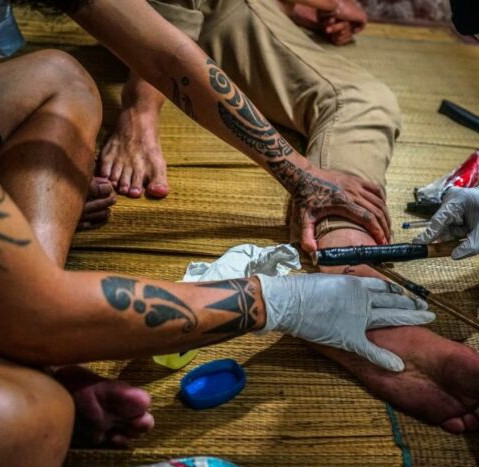
The tattooing ritual of the Dayak tribe’s tattoo artist includes the slaughtering of a chicken and the distribution of its blood among others, offering a sacrifice to the spirits of the ancestors. After the ritual, the painful tattooing process begins, which can last for several weeks. Tattoos can also serve as a charm against illness if they are placed on the fingers or wrist.
The Most Common Symbols and Their Meanings
- Palm Leaf on the Arms: Protects against evil spirits of the jungle.
- Tree of Life on the Chest: A symbol of strength and immortality, which protects against a mortal enemy.
- Bamboo: A symbol of strength and a balanced life.
Ngaju Dayak Tribe: Courage and the Hunt
The Ngaju Dayak tribe is located on Borneo Island and preserves ancient tattooing traditions. For the young male members of the tribe, tattoos are symbols of courage, skill, and honor, recognizing acts of heroism and successful hunts.
Wild boar hunting is of paramount importance to the Ngaju Dayak tribe. The wild boar not only provides a source of food but also strengthens the tribe’s connection with nature. During the wild boar hunt, young men test their bravery, skill, and perseverance.
When a young boy returns from a wild boar hunt, the tribe’s tattoo artist creates a tattoo on the boy’s shoulder as a sign of recognition. The tattoo usually depicts the wild boar motif, symbolizing the man’s strength and courage. With this tattoo, the young man proves himself worthy of recognition and respect from the other members of the tribe.
During the creation of the tattoo, the tattoo artist uses specialized tools and techniques to minimize pain and ensure the tattoo heals quickly. The artist prepares the tattoo ink from natural materials found in nature, such as charcoal and plant dyes.
For young men returning from the wild boar hunt, the tattoo not only signifies the recognition of courage and skill but also marks their integration into the tribe and the transition to manhood. Through tattoos, tribe members can proudly carry their past, traditions, and values, while paying respect to the memory of their ancestors.
Kayan Tribe: Triumphs in Battle
The Kayan tribe is located on Borneo Island and is famous for its tattooing traditions. For the tribe’s warriors, tattoos are particularly important, serving as signs of triumphs and honor gained in combat.
When a member of the Kayan tribe defeats an enemy single-handedly, this act deserves immense recognition and respect within the tribe. To celebrate this and as a symbol of recognition, the man’s palm and all fingers are covered with tattoos. The tattoos usually depict battle scenes, animal symbols, or natural motifs, which symbolize the man’s strength, bravery, and skill.
If a member of the Kayan tribe only participated in the victory and did not defeat the enemy alone, they receive less recognition in the tribe. In this case, only one finger, usually the thumb, is tattooed. The tattoo in this case depicts similar motifs to those of the full hand tattoo, but occupies a smaller area.
In the Kayan tribe, tattoos not only display combat successes and bravery but also reflect rank within the tribe. The more tattoos adorn a man’s body, the greater the respect and recognition he receives in the community.
Traditional Tattooing Tools
The tattoo artists of the Kayan tribe, as well as other tribes living on Borneo Island, use traditional tools to create the tattoos. These tools are usually simple but effective, and the tattoo artists craft them themselves using local natural materials.
The basic tattooing tool is the needle, which is usually made from a thicker plant stem or animal bone. The tip of the needle is sharpened to easily penetrate the skin. Sometimes the needle is reinforced by placing several thinner needles next to each other to create wider lines or patterns simultaneously.
The needle is attached to a short piece of wood or bamboo stick, which the tattoo artist holds in hand during the tattooing process. The needle is often wrapped tightly around the stick to ensure it stays in place during the tattooing process.
The ink used for coloring is typically made from local plants and animal pigments. The most commonly used ink is black ink made from charcoal, which is mixed with water to achieve the right consistency. This mixture is sterilized, and sometimes natural preservatives are added for longevity.
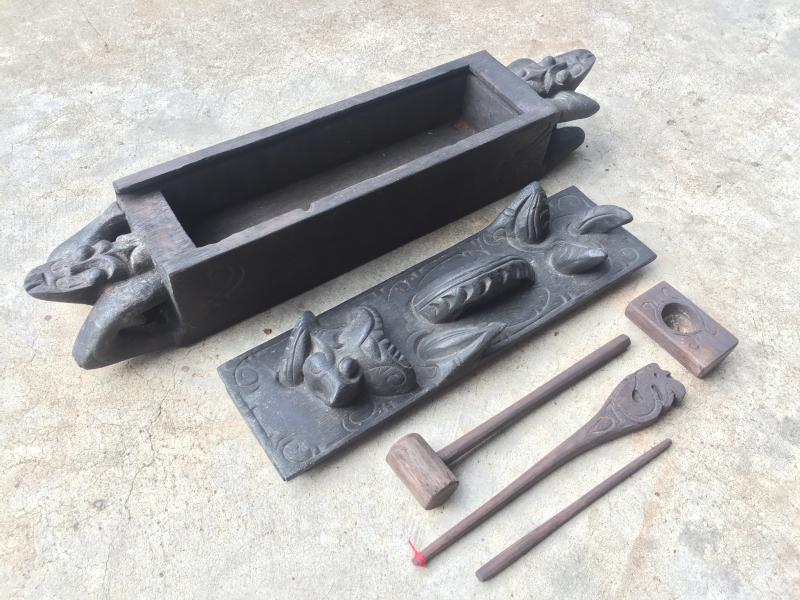
The tattooing tools are usually stored in a specially made wooden box that protects them from contaminants and environmental effects. The boxes are often decorated with intricate and unique motifs, reflecting the tattoo artist’s pride and dedication to the craft.
During the tattooing process, the artist uses the needle and ink to pattern the skin. The needle is guided across the surface of the skin while the ink is gently and evenly delivered under the skin. The process can be quite painful, and larger tattoos may require several sessions. After the tattooing, the skin is disinfected.
Religion and Belief Systems
The religion and belief systems of the tribes living on Borneo Island are closely linked to tattoos. The most prominent of these tribes is the Dayak tribe, whose beliefs and religious practices have significantly influenced the tattooing culture in the region. Religious beliefs and rituals play a central role in the creation, meaning, and wearing of tattoos.
The religious beliefs of the Dayak tribe are based on animism, meaning that every object, animal, and plant in nature is populated by spirits. Maintaining a good relationship with the spirits is vital in the life of the tribe, as the spirits can bring them blessings or curses. Tattoos serve to represent numerous spirits and ancient powers, which provide protection and strength to the wearer.
Tattoos play a major role in the social and religious life of the Dayak tribe. They help distinguish tribe members based on rank, tribal affiliation, and professional skills. Furthermore, tattoos help guide souls in the afterlife and protect them from evil spirits and enemies.
The tattooing process itself is ritualistic. Dayak tattoo masters often perform a rite before commencing the tattoo. For example, they may slaughter a chicken and distribute its blood among others as a sacrifice to the ancestor spirits. The goal of the rituals is to gain the goodwill of the spirits and protect the wearer during the tattooing.
Among the tattoo symbols are numerous religious and mythological motifs. Examples include the Tree of Life, bamboo, the tortoise, and the palm leaf. These symbols represent strength, immortality, luck, fertility, leadership skills, and balance, among other things.
Headhunters and Tattoos
Headhunters were also found among the tribes living on Borneo Island, particularly among the members of the Dayak tribe. Headhunters were characterized by collecting severed human heads from members of enemy tribes taken prisoner in war. Headhunting was practiced for various reasons, such as acquiring power, possessing territory, confirming rank, or promoting fertility.
Tattooing played a major role in the lives of headhunters, as tattoos served as symbols of individual and group strengths, abilities, and deeds. Headhunters used tattoos for the following purposes, among others:
- Recognition and Rank: Headhunters’ tattoos often bore the signs of honor and heroic deeds, which they received after successful headhunting expeditions. The more heads a headhunter acquired, the more tattoos he received, which increased his rank and recognition in the community.
- Protection: Tattoos provided protection for headhunters from the spirit world and natural forces. The symbols and motifs found on the tattoos were designed to guard the wearer against evil spirits, curses, and other dangers.
- Spiritual Guidance: Headhunters’ tattoos helped souls navigate the afterlife. Through the symbols found on the tattoos, headhunters sought guidance from the ancestors and the spirit world to help them find their way to the afterlife.
- Identity and Belonging: Headhunters’ tattoos were expressions of their individual and group identity. Through tattoos, headhunters could be distinguished from members of other tribes, while also reinforcing their sense of belonging to their community.
The tattoos worn by headhunters thus served various purposes in their community and in the life of the individual. The significance and power of the tattoos were reflected in the fact that only those who successfully completed headhunting missions could receive headhunter tattoos. This made the tattoos a kind of status symbol within the tribe.
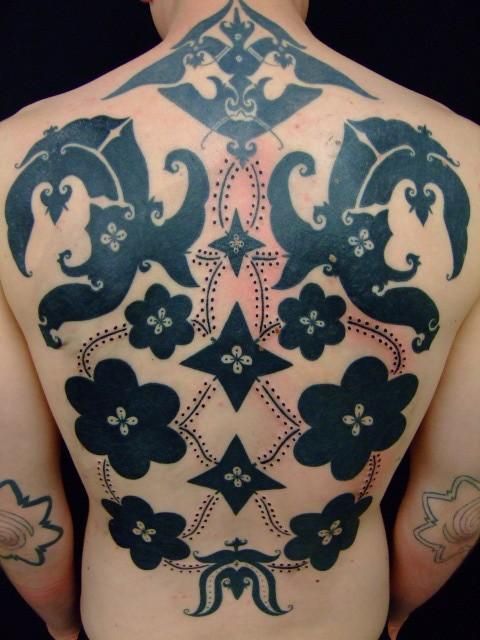
The tattoos worn by headhunters mostly consisted of complex and very detailed patterns that narrated the individual’s history and achievements. Common patterns included stylized plant, animal, and geometric forms, which were symbols of natural forces, the spirit world, and the community.