Starting your homebrewing journey doesn’t require a massive budget. With just a few essential tools, you can brew your own beer that rivals craft-quality results. Here’s what you’ll need to begin:
1. Fermenter
A fermenter is an airtight vessel made of food-grade plastic or stainless steel, equipped with an airlock. The airlock allows carbon dioxide to escape during fermentation while preventing air and contaminants from entering.
A 30-liter fermenter is ideal — it provides enough space for a standard 25-liter batch.
2. Brewing Kettles
Two pots – one for mashing and one for heating your sparge (rinse) water.
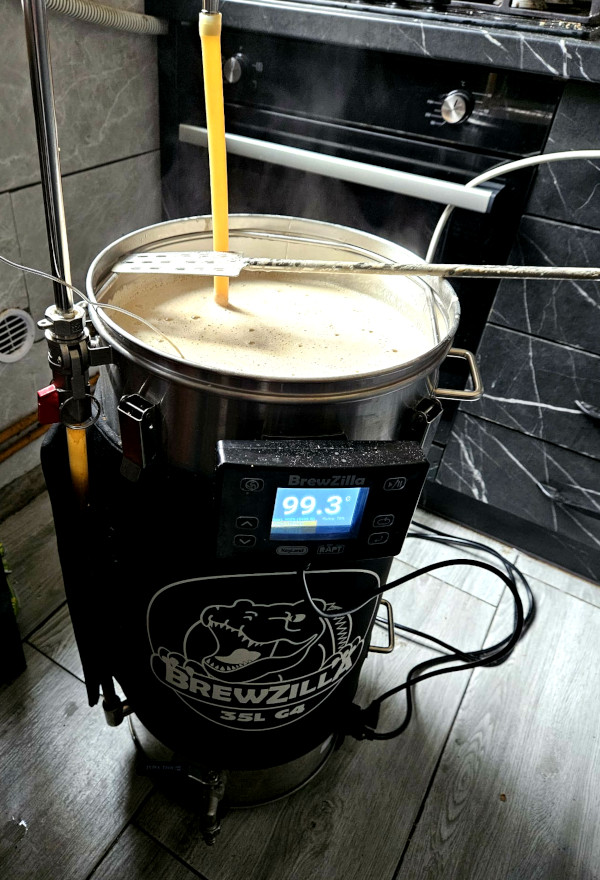
Or, an all-in-one electric brewing system like the BrewZilla, Grainfather, or similar, which includes a built-in filter basket and recirculation pump for more controlled brewing.
3. Filtration and Hopping Equipment
Grain bag or false bottom filter: If you’re brewing in a pot, this helps separate the malt from the wort during mashing.
Hop spider: A cylindrical mesh filter that keeps hop particles from freely floating in the wort, resulting in a cleaner, clearer brew.
4. Measuring Tools
Digital thermometer: Choose one with a probe and fast response time to monitor mash temperature accurately.
Hydrometer or refractometer: Measures the sugar content of your wort (OG and FG), allowing you to calculate alcohol by volume (ABV).
Precision scale (accurate to 0.01 g): Essential for weighing brewing salts and minerals when adjusting your water profile.
Larger kitchen scale: For weighing malt and other bulk ingredients.
pH meter: Helps you keep your mash and water chemistry within optimal ranges.
5. Supporting Tools and Containers
A few large bowls or buckets for malt rinsing, bottle washing, and sanitizing – you’ll use them often throughout the brewing process.
Bottle drying tree: Holds around 80 bottles and makes drying easy after sanitizing.
Caps and hand capper: Necessary if you plan to bottle your beer.
Funnels, measuring cups, and silicone tubing: For safe and spill-free transferring and measuring.
6. Malt Mill
A manual malt crusher is a basic but essential piece of equipment. Avoid kitchen grain grinders – they turn malt into flour and destroy the husks.
The goal of crushing is not to pulverize but to crack the kernels while keeping the husk (the outer shell) mostly intact. The husks play a key role in filtration during lautering.
7. Cleaning and Sanitizing
Cleanliness is absolutely crucial in brewing. Even the best ingredients can be ruined by contamination.
You’ll need:
Sanitizer: such as Chemsan, Starsan, or Chemipro Oxi.
Bottle and fermenter brushes for thorough cleaning.
Gloves and protective eyewear for handling chemicals safely.
8. Optional but Useful Equipment
CO₂ tank with regulator and tap system: Perfect if you plan to serve your beer from a keg instead of bottles.
Wort chiller or heat exchanger: Rapidly cools the wort after boiling — essential for preserving clean, crisp flavors.
Reverse osmosis (RO) water filter: Lets you build your own precise water profile for advanced brewing control.
Notebook or digital brewing log: Record every parameter of your brew — ingredients, temperatures, timings, gravity readings. These notes are your roadmap to improvement and consistency.
Starting small is the best way to learn. As you brew more often, you’ll naturally refine your process, discover your favorite styles, and develop the unique touch that makes your beer truly your own. Every great brewer started with just a bucket, a pot, and a dream.